
Indoor and Outdoor Boat Storage Options
Boat owners choose among three main storage methods: outdoor uncovered parking, indoor climate-controlled units, and shrink-wrap protection. Outdoor spaces suit budget-conscious owners; indoor units guard against UV damage and temperature swings. Shrink-wrapping shields hulls from moisture and debris. US Storage Units is located in Hallandale Beach, FL, US.
Key Takeaways
- Shrink wrapping prevents mildew when boat interiors are completely dry before covering application.
- Damp-Rid containers absorb moisture inside shrink-wrapped boats during off-season storage periods.
- Indoor climate-controlled storage maintains stable temperature and humidity levels year-round for boats.
- US Storage Units in Hallandale Beach, FL offers both indoor and outdoor boat storage options.
What Should You Know Before Storing Your Boat?
Two decisions determine whether a boat stays protected through winter or suffers costly damage: climate exposure and budget. Boat owners must decide whether indoor or outdoor boat storage best suits their local weather, financial limits, and the type of vessel they own before choosing a facility. Skipping this step invites hull cracking, mold growth, and faded upholstery from prolonged sun and moisture exposure.
Facility type is only half the equation. Location and demand shift pricing constantly, so confirming rates directly with each facility protects owners from budget surprises.
How much does boat storage cost?
Boat storage cost depends on unit size, facility location, seasonal demand, and space availability at the time of booking. A covered slip in a high-demand coastal area typically commands a different rate than an open lot inland. Confirm pricing directly with each facility to ensure accurate information.
How can owners find boat storage near them?
Searching for boat storage near me works best through an online map tool that compares facilities by location, distance, price, and open availability. Checking neighboring towns and ZIP codes often surfaces lower rates than the first listing found. Owners weighing enclosed boat storage against open-air lots. Comparing boat trailer storage options for towable vessels, should use the same side-by-side approach.
Before booking, owners should confirm the following:
- Boat length, beam width, and trailer dimensions match the unit size
- Climate control or covered protection fits the region's weather patterns
- Access hours align with seasonal launch and haul-out schedules
- Total cost, including any deposits or administrative fees, is confirmed in writing
US Storage Units, based in Hallandale Beach, Florida, connects boat owners nationwide with local facility listings to simplify this comparison process.
How Do You Choose Indoor Or Outdoor Storage?
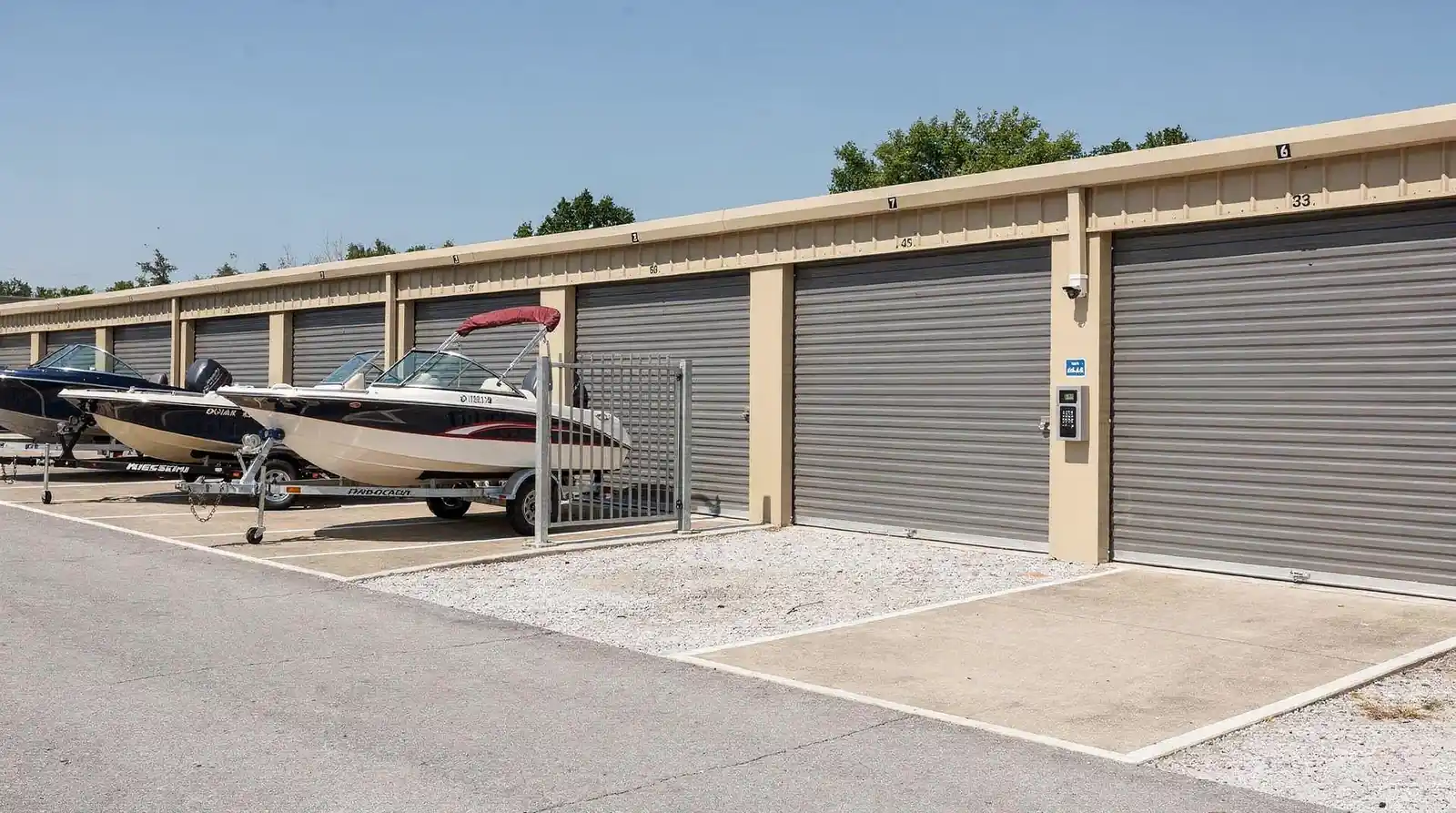
Facility type determines how much protection a stored vessel receives. Most boat storage facilities offer two basic formats: open-air parking spaces or enclosed ground-level units, and the choice depends on climate exposure, boat value, and how often owners plan to access their craft.
Owners comparing options should follow a short decision process before signing a rental agreement:
- Assess exposure needs first. Boats kept outdoors face sun, rain, and temperature swings; owners wanting full protection from these elements should select enclosed boat storage rather than an open lot.
- Check security features. Compare lighting, gate access controls, and posted entry hours across facilities under consideration. These details determine whether a boat stays reachable and protected around the clock.
- Confirm size compatibility. Owners with larger boats, or those pairing a vessel with a trailer, may find that standard vehicle spaces fall short. Facilities offering dedicated RV-style storage often accommodate oversized hulls and boat trailer storage setups more effectively than standard bays.
- Match access hours to usage patterns. Year-round boaters need reliable gate hours and straightforward entry procedures, not seasonal-only access windows.
Is Outdoor Storage Cheaper Than Enclosed Storage?
Open-air spaces generally carry lower rates than fully enclosed units, since less structure and security infrastructure factor into pricing. Boat owners searching for boat storage near me should still weigh long-term boat storage cost against potential weather damage. Repair expenses often outweigh the savings from a cheaper outdoor spot.
Facilities that let owners compare lighting, access controls, and unit dimensions side by side make this decision far easier to finalize with confidence.
Should You Shrink Wrap Or Use Enclosed Storage?
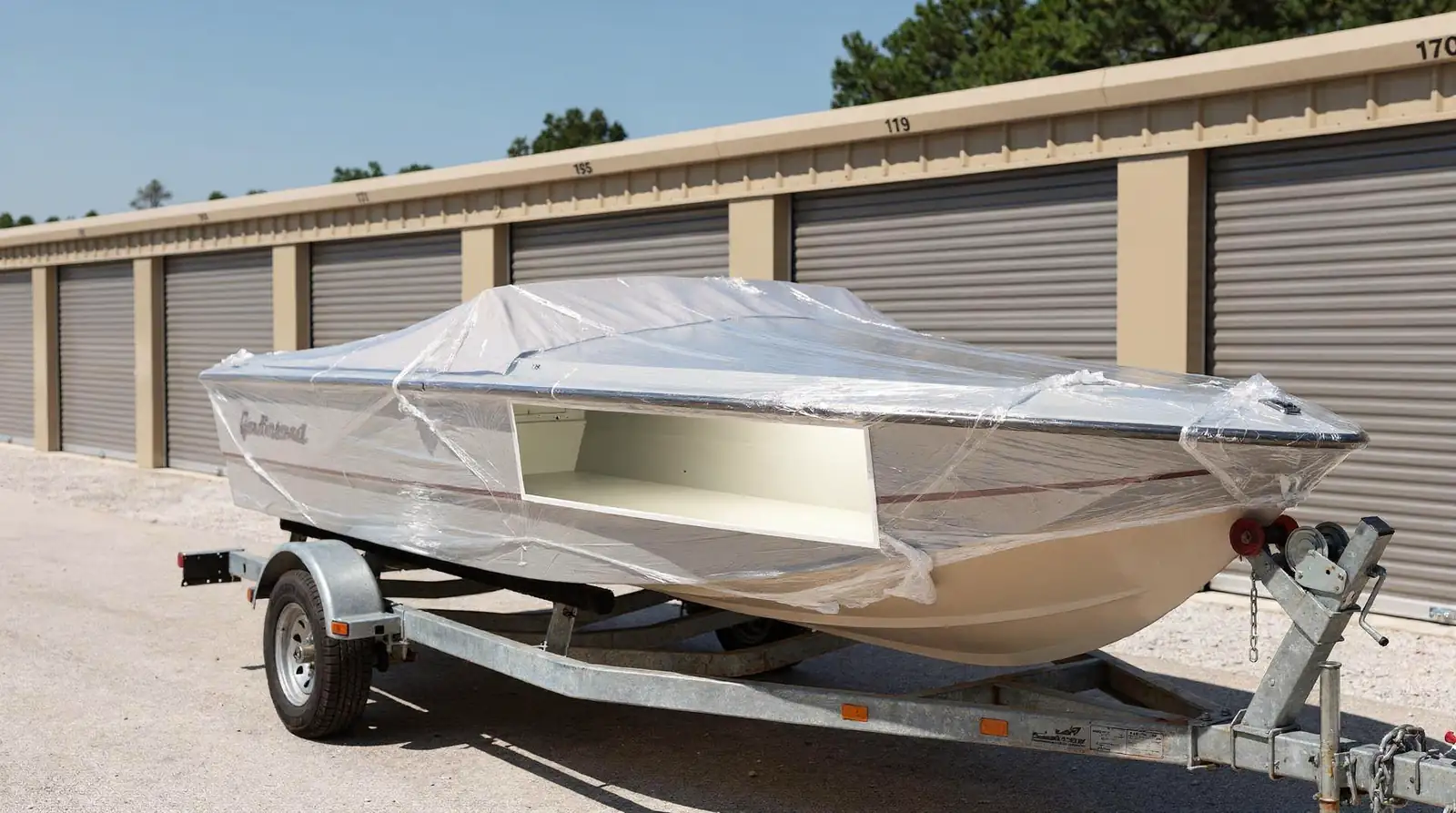
Two methods dominate off-season protection: shrink wrapping and indoor boat storage. Each guards a vessel differently, and choosing wrong risks hull damage, mildew, or repair bills that outweigh any savings.
Shrink wrapping creates a tight, weather-resistant seal around the hull. This barrier blocks moisture, dirt, and UV rays that would otherwise degrade the boat's finish over a long winter. Success depends entirely on preparation, not the wrap itself.
Does a boat need to be dry before shrink wrapping?
Yes. The interior must be completely dry before the wrap goes on; sealing a damp cabin traps moisture inside and invites mildew. Adding moisture-absorbing containers before wrapping gives extra insurance against trapped humidity, even when the boat starts fully dry.
Enclosed boat storage takes a different approach by controlling the surrounding air instead of sealing the hull. Heated indoor facilities keep air circulating, so cabins dry out naturally and mold has little chance to form. Unheated indoor storage costs less than heated units while still keeping the boat under a roof.
| Storage Method | Moisture Control | Rodent Protection | Relative Cost |
|---|---|---|---|
| Shrink wrap | Requires dry interior + absorbers | Limited | Lower |
| Heated indoor | Airflow prevents mold | Strong | Higher |
| Unheated indoor | Moderate | Strong | Moderate |
Which option costs less?
Shrink wrapping typically runs cheaper upfront, but unheated indoor units narrow that gap while adding rodent protection. Owners weighing boat storage cost against risk often find unheated indoor space a reasonable middle ground between price and peace of mind.
How Do You Compare Boat Storage Costs?
Owners compare boat storage costs by requesting quotes from multiple facilities in the same market and lining up unit sizes side by side. Skipping this step costs real money: facilities in a single metro area can list dramatically different rates for the same size unit. A large number of listed facilities in a given market gives owners several unit sizes and web prices to weigh at once when searching for boat storage near me, so narrowing the search to one location without checking nearby options often means overpaying.
Pricing structures vary by facility, and some reduce boat storage cost through online-only pricing, first-month discounts, or limited-time deals. These offers are not universal, so confirming current promotions directly with each facility remains essential before signing a lease.
What Size Unit Does a Boat or Trailer Need?
Boat trailer storage sizing follows the same principle used for vehicle storage. Common unit dimensions run from 10x15 up through 10x30, with the right choice depending on total trailer length. Owners should measure bumper-to-bumper length before booking and leave extra room for entry and exit, since a unit too tight to maneuver in defeats its purpose.
How Should Owners Shortlist Facilities?
A structured comparison prevents wasted spending. Owners evaluating enclosed boat storage or open-air options should weigh the following:
- Unit size against measured boat and trailer length, plus clearance for entry
- Listed web price versus any first-month or online-only discount
- Number of comparable facilities within the same ZIP code or metro area
- Availability of boat storage promotions with defined start and end dates
Reviewing these factors together, rather than settling on the first available listing, keeps costs aligned with actual storage needs.
What Mistakes Should You Avoid When Storing?
Four errors account for most boat storage regrets: wrapping a wet hull, skipping security review, over-committing to a lease, and forcing an oversized boat into the wrong unit. Each mistake carries real cost, from mildew damage to wasted monthly fees. Avoiding them starts with preparation, not luck.
Does wrapping a wet boat cause damage?
Yes. Sealing a hull while it remains wet or damp traps moisture underneath the wrap. That trapped moisture becomes the breeding ground for mildew. Owners should dry the boat completely before covering it, whether they choose shrink wrap or move it into enclosed boat storage. Skipping this step turns a protective measure into a hidden liability.
Is leaving a boat uncovered at home a safe option?
Not necessarily. A boat parked uncovered in a driveway lacks the surveillance, gated access, and controlled entry that a dedicated facility provides. Owners searching boat storage near me should weigh that safety gap against the convenience of keeping a vessel close to home.
Two more mistakes trip up owners who plan poorly around timing and sizing:
- Locking into a long lease for short-term needs. A boat only needing shelter during travel, relocation, or driveway renovations fits better under month-to-month terms than a rigid annual contract.
- Forcing a large boat into a standard unit. Vessels exceeding typical dimensions strain boat trailer storage spaces built for smaller trailers. Comparing broader vehicle storage options before booking prevents wasted deposits and return trips.
Reviewing dryness, security, lease flexibility, and unit size before signing keeps boat storage cost predictable and protects the vessel through every season.
FAQ
How much does it cost to store a boat?
Cost depends on unit size, facility location, seasonal demand, and space availability at booking time. Rates vary between covered slips in coastal areas and open lots inland, so owners confirm pricing directly with the facility.
What prevents mildew in a shrink-wrapped boat?
Shrink wrapping prevents mildew when boat interiors are completely dry before the covering goes on. Damp-Rid containers placed inside the wrapped boat absorb moisture during off-season storage.
Does US Storage Units offer both indoor and outdoor boat storage?
Yes, US Storage Units in Hallandale Beach, FL offers both indoor and outdoor boat storage options. The company also connects boat owners nationwide with local facility listings for comparison.
Facts
- US Storage Units is located in Hallandale Beach, FL, US.
Conclusion
In closing, boat owners must evaluate their specific storage requirements and environmental conditions to determine whether indoor facilities, outdoor spaces, or shrink wrap protection best serves their needs. Each option presents distinct advantages regarding weather protection, accessibility, and long-term preservation. US Storage Units recognizes the importance of securing appropriate storage solutions. Remains committed to providing reliable facilities for watercraft and personal property throughout our service areas.