
What Climate Controlled Storage Protects
Climate-controlled storage protects electronics, wooden furniture, artwork, photographs, musical instruments, and important documents from humidity, heat, and mold damage. Hallandale Beach, FL residents facing high humidity and heat need this option, especially those storing sensitive antiques, vinyl records, leather goods, or business inventory for extended periods year-round.
Climate-controlled storage units protect sensitive belongings—wood furniture, electronics, documents, and fabrics—from temperature swings, humidity, and mold during long-term storage. Movers, downsizers, and business owners storing inventory in markets like Los Angeles, CA, where 150 facilities compete on price
Key Takeaways
- Climate-controlled storage maintains stable temperatures and humidity levels that protect sensitive items from damage.
- US Storage Units in Hallandale Beach, FL offers climate-controlled units as a common feature at their facility.
- Valuable collections including electronics, documents, artwork, and furniture require climate control to prevent deterioration.
- Climate-controlled storage costs more than standard units but delivers significant protection benefits for temperature-sensitive belongings.
What Do You Need Before Renting Climate-Controlled Storage?
Four preparations come before signing any storage contract. Skipping them leads to an oversized unit, an inflated bill, or a facility that sits farther away than necessary. Renters comparing climate controlled storage against standard units should complete each step below, in order, before requesting a quote.
- Measure every item going into storage. Note bumper-to-bumper length and the widest point of large pieces, then leave room for entry and exit inside the unit. Accurate dimensions prevent renters from paying for square footage they never use.
- Estimate how long the items will stay in storage. Climate control matters most for belongings kept in storage for a long period of time, since extended exposure to heat, cold, and humidity causes the most damage.
- Pull quotes from multiple facilities, not just the closest one. Prices vary by unit size, location, and demand, so comparing several listings helps renters avoid overpaying.
- Check nearby ZIP codes before booking. Rates for climate controlled storage near me searches often differ block by block; a facility two ZIP codes over can offer a lower price for the same unit size.
Is Climate-Controlled Storage Worth the Extra Cost?
Climate controlled storage cost typically runs higher than standard storage, but the premium buys temperature and humidity regulation that standard units lack. For short stays, the gap in climate controlled vs standard storage pricing matters less. For long-term storage of sensitive or valuable belongings, the added cost offsets potential damage that standard units cannot prevent.
What Is Climate Controlled Storage and How Does It Work?
Climate controlled storage regulates both temperature and humidity inside a storage unit, keeping stored items in optimal condition throughout the year. Units without this protection expose furniture, electronics, and documents to swings in heat, cold, and moisture that cause lasting damage. Understanding what is climate controlled storage starts with the mechanics behind it, not just the marketing label.
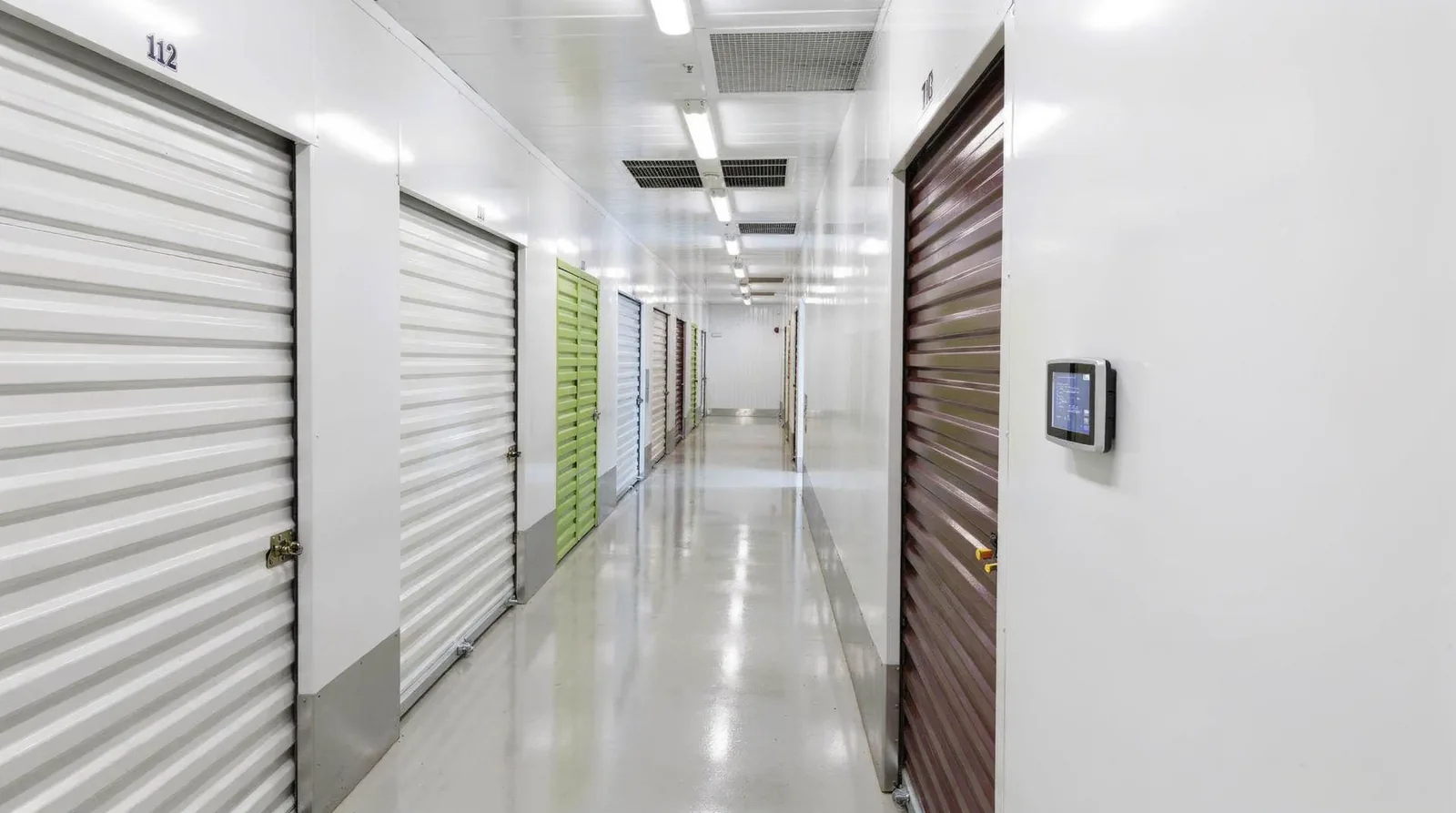
A climate-controlled unit sits inside a fully enclosed building equipped with an HVAC system. This indoor placement is the first structural difference between climate-controlled storage and a standard drive-up unit. The building's HVAC system maintains a stable range, typically between 55°F and 85°F, regardless of outdoor conditions.
How does the temperature stay consistent inside the unit?
A ventilation system monitors conditions continuously and activates automatically. When temperatures rise above or fall below the set range, the system kicks on and restores the unit to proper levels. Renters do not need to adjust anything manually; the process runs on its own.
What happens inside a standard unit without climate control?
Standard storage buildings lack insulation and HVAC support, so indoor temperatures track closely with the outdoors. On a hot afternoon, a non-climate-controlled unit can run 20 to 30 degrees hotter than the temperature outside. An outdoor reading of 90°F can push conditions inside past 110°F.
| Feature | Climate-Controlled Unit | Standard Unit |
|---|---|---|
| Location | Indoors, enclosed building | Often outdoor or drive-up |
| Temperature range | Roughly 55°F–85°F | Tracks outdoor extremes |
| Humidity control | Regulated year-round | None |
| Hot-day interior temp | Stays within set range | Can exceed 110°F |
This comparison of climate controlled vs standard storage shows why the enclosed, HVAC-supported design matters for anything sensitive to heat, cold, or moisture.
How Do You Decide Between Climate Controlled vs Standard Storage?
Three factors settle the decision: item value, local climate, and monthly budget. Renters who skip this evaluation risk paying for protection they don't need. Worse, losing sentimental belongings to mold and warped wood. A methodical comparison prevents both mistakes.
Follow these steps before signing a lease:
- List every item planned for storage and flag anything valuable or sentimental that damage would ruin permanently.
- Check the regional climate. Areas with extreme temperature swings or high humidity raise the stakes for standard storage significantly.
- Pull up a climate controlled storage near me search and compare listed facilities by location, distance, price, and availability using a comparison map tool.
- Note any online-only pricing, first-month discounts, or limited-time deals that offset the premium for climate controlled storage.
- Weigh the adjusted cost against a standard-unit baseline, since basic units can start around pricing varies a month in some markets.
Is Climate Control Worth the Extra Cost?
Climate control earns its premium when stored goods are irreplaceable or environmentally fragile. For everyday tools, patio furniture, or vehicles, standard units usually suffice.
What Items Should Never Go in Standard Storage?
Photographs, wood furniture, electronics, and important documents belong in climate controlled storage because temperature swings and humidity cause warping, corrosion, and mold. A basement full of vacation decorations or garden equipment tolerates standard conditions without issue.
| Factor | Standard Storage | Climate Controlled Storage |
|---|---|---|
| Item sensitivity | Durable, low-value goods | Valuable or sentimental items |
| Regional climate | Mild, stable temperatures | Extreme swings or high humidity |
| Typical starting cost | Around pricing varies in some markets | Higher, offset by discounts or online pricing |
Comparing facilities on price, location, and available deals turns this decision into arithmetic rather than guesswork.
How Do You Find Climate Controlled Storage Near You?
A nationwide directory of more than 10,000 storage facilities gives renters searching for climate controlled storage near me a wide field of nearby options to compare. Local markets often list dozens of facilities with different sizes, prices, and promotions. Comparing multiple listings side by side prevents overpaying and reveals which providers offer the best value for a given neighborhood.
The search process works best as a short sequence of steps rather than a single click.
- Enter a home or business ZIP code into the facility locator to pull up nearby options.
- Filter results by unit size, feature (climate control), and monthly price.
- Review web-only prices and any limited-time storage deals attached to specific facilities.
- Compare at least three listings before committing to a location.
- Reserve online or by phone before rates change, since promotional pricing is not guaranteed to hold.
How many facilities are typically available in a major city?
Large metro markets tend to show a substantial number of options. Philadelphia, for example, lists around 150 storage facilities with posted unit sizes, web prices, and deals. Los Angeles shows a comparable count, also near 150 facilities, giving renters in both cities plenty of room to shop around.
Does comparing listings actually save money?
Yes. Checking several facilities in the same city consistently uncovers lower rates than settling on the first search result. Since pricing varies by unit size, demand, and location within a metro area, comparison shopping remains the most reliable way to avoid overpaying for climate controlled storage.
What Mistakes Should You Avoid When Renting Climate Control?
Four errors account for most overpayment and damage claims tied to climate controlled storage: skipping rate comparisons, misjudging which items need protection, ignoring web-only pricing, and selecting the wrong unit size. Renters lose money and risk damaged belongings when these steps get skipped. Avoiding each mistake in order protects both budget and inventory.
- Compare nearby ZIP codes before booking. Storage prices shift block to block, so a facility two miles away may charge less for the same size unit. Skipping this comparison often means missing lower available rates entirely.
- Identify sensitive items first. Furniture, electronics, and artwork suffer under temperature swings and humidity. Renters who skip this inventory step frequently discover the standard-unit vs. climate-controlled decision only after damage occurs.
- Check for web-only pricing. Many facilities post reduced climate controlled storage cost figures exclusively online. Calling ahead without checking the website risks paying a higher walk-in rate for the identical unit.
- Match unit size to actual need. Common size options exist for a reason; renting too large a unit inflates the monthly bill without added benefit.
Is a Bigger Unit Always Safer for Climate Control?
No. Oversized units cost more per month without improving temperature regulation. Selecting a size based on actual inventory, not guesswork, keeps the climate controlled storage near me search focused on value rather than excess space.
Climate-controlled storage protects valuable possessions from temperature and humidity fluctuations, preserving their integrity and longevity. Individuals storing electronics, documents, artwork, furniture, and collectibles benefit substantially from this environmental protection.
Whether you are relocating, downsizing, or managing seasonal inventory, climate-controlled units address the preservation needs that standard storage cannot meet. US Storage Units recognizes that protecting your belongings requires more than basic shelter—it demands active environmental management to ensure your stored items remain in optimal condition.
FAQ
What items does climate-controlled storage protect?
Climate-controlled storage protects wood furniture, electronics, documents, fabrics, artwork, and collections from temperature swings, humidity, and mold during long-term storage.
Who needs climate-controlled storage?
Movers, downsizers, and business owners storing inventory need climate-controlled storage, along with anyone storing valuable collections like electronics, documents, artwork, and furniture that deteriorate without stable conditions.
How does climate-controlled storage keep temperature stable?
A climate-controlled unit sits inside a fully enclosed building with an HVAC system that maintains a stable range, typically between 55°F and 85°F, activating automatically when conditions shift.